Troubleshooting Damaged Dentures
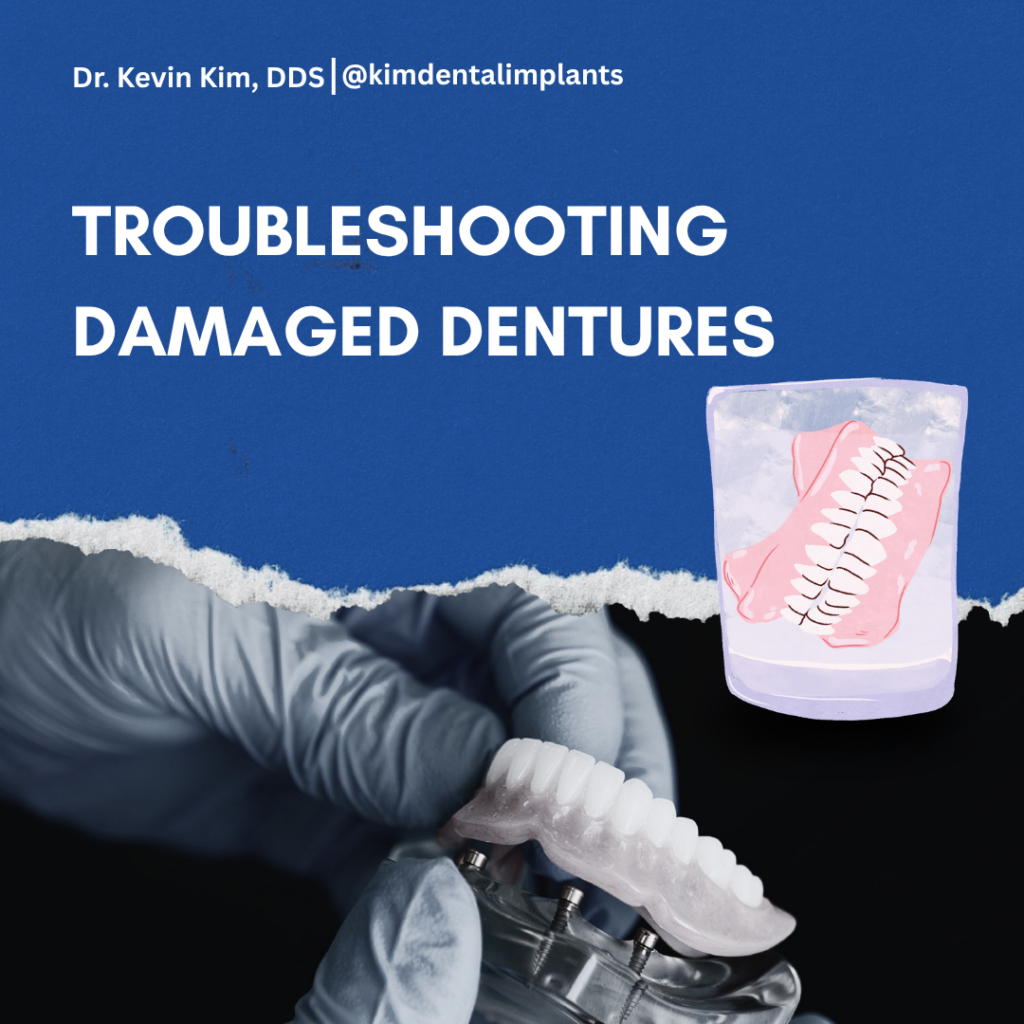
September 2026 brings crisp autumn mornings, a shift back to structured routines, and preparation for upcoming fall family events. Then, the unthinkable happens: during your morning cleaning routine, your prosthesis slips out of your hands and hits the hard bathroom tile floor with a sickening snap.
Few dental situations trigger a sense of immediate panic quite like compromised or broken dentures. A broken plate or a loose fit instantly threatens your ability to speak clearly, chew your favorite meals, and smile with confidence at social gatherings.
Denture structural failure is an urgent problem that requires precise, professional calibration rather than guesswork. By understanding how to address sudden breaks and recognizing how changing underlying bone levels affect fit, you can step away from temporary fixes. Partnering with a skilled restorative expert ensures your appliance is quickly restored to blend perfectly with your natural oral anatomy.
Handling Sudden Structural Breaks — The Superglue Danger
The Invisible Strain
Sometimes the damage from a drop isn’t an outright snap, but a subtle, shifting hairline crack in denture plate material. This tiny fracture might seem manageable, but the immense, repetitive pressure of chewing will quickly force that micro-crack to spread, eventually causing the entire base to split in half.
The Toxic Home-Repair Trap
When dealing with broken dentures, many patients make the mistake of reaching for over-the-counter superglue or commercial hardware adhesives. This is highly dangerous for two primary reasons:
- Tissue Toxicity: Commercial glues contain harsh chemicals that dissolve in saliva, leading to severe chemical burns, chronic inflammation, and allergic reactions on your sensitive oral tissues.
- Irreversible Distortion: Even a micro-millimeter alignment mistake while gluing a cracked plate changes your bite geometry. Once the glue hardens incorrectly, it often ruins the appliance entirely, forcing an expensive and unnecessary total replacement.
The Professional Lab Solution
A professional laboratory repair safely addresses structural failures by using biocompatible, medical-grade acrylics. Your clinician aligns the broken edges using a precise stone model of your mouth, curing the new acrylic under heat and pressure to fully restore the denture’s original strength and perfect adaptation. When a denture experiences fatigue or a sudden drop, a hairline crack appears. Bypassing DIY superglue—which distorts your bite and exposes you to chemical toxins—and choosing a professional lab repair instead ensures your appliance is restored using biocompatible acrylic and high-heat curing for long-term structural integrity.
Navigating Options and Changing Oral Landscapes
The Constantly Shifting Foundation
If you have noticed that your appliance is slipping, clicking when you talk, or creating painful sore spots, the issue might not be the prosthetic itself—it may be your denture gums. Your jawbone naturally requires the continuous stimulation of active tooth roots to maintain its volume. Once teeth are lost, the underlying bone and soft tissue begin to slowly and permanently shrink over time.
The Impact on Partial vs. Full Restorations
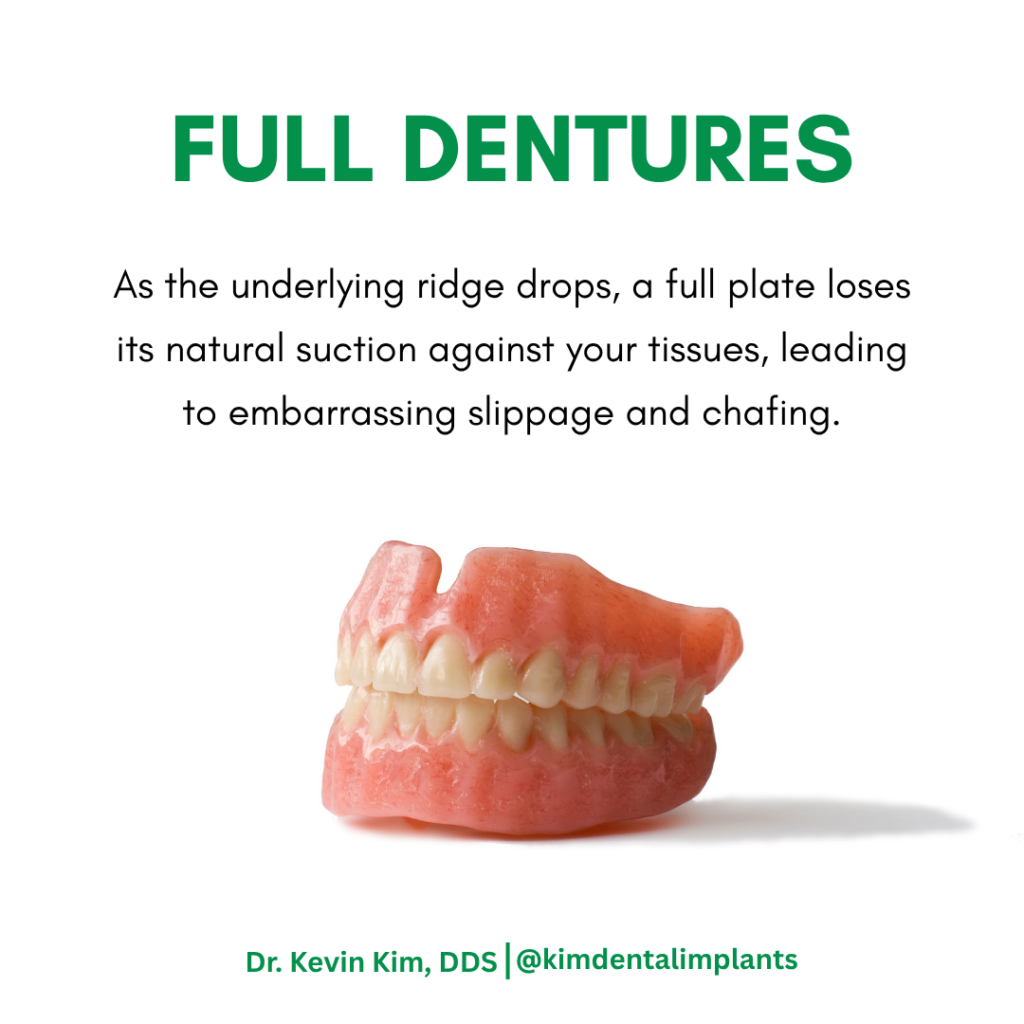
- Full Dentures: As the underlying ridge drops, a full plate loses its natural suction against your tissues, leading to embarrassing slippage and chafing.
- Removable Upper Partial Dentures: For patients utilizing removable upper partial dentures, a shrinking bone foundation causes the metal support clasps to torque unevenly against your remaining natural anchor teeth. This imbalance strains those healthy teeth and leaves the partial unstable.
Eliminating Sore Spots via Relines
To stop this progressive instability from causing chronic tissue calluses or severe infections, your appliance requires a professional reline. By adding a fresh layer of pink acrylic to the underside of the base, we re-map the prosthetic to match the current, exact contours of your shifting ridge.
The Specialized Biomechanical Touch
Re-engineering Prosthetic Stability
Managing removable appliances requires a deep understanding of facial biomechanics. As a highly respected restorative clinician, Dr. Kevin Kim looks beyond simple surface adjustments to evaluate how your prosthetic coordinates with your jaw joints, muscle movements, and remaining teeth.
Advanced Custom Adaptation
At our Lakewood clinic, we utilize advanced structural materials and high-precision digital impressions to ensure your custom prosthetics fit comfortably and stably. Dr. Kim reshapes, refits, and engineers your restorations to ensure even weight distribution across your jaw, instantly relieving painful pressure points and restoring natural chewing power.
Prosthetic & Denture Q&A
What is the difference between a hard denture reline and a soft denture reline?
A hard reline uses durable, medical-grade acrylic to completely reshape the interior base of your denture, providing a long-lasting, firm fit that typically lasts for several years. A soft reline utilizes a pliable, medical-grade silicone material that remains cushion-like and flexible. Soft relines are highly recommended for patients with advanced bone loss or exceptionally sensitive, easily irritated gum tissues who find standard hard acrylic bases too uncomfortable to wear.
Can a hairline crack in a denture plate be fixed during a single office visit?
Yes, in many cases, a localized hairline crack can be repaired relatively quickly. If you bring the appliance into our office before the plate splits completely into separate pieces, we can often utilize our direct laboratory workflow to stabilize the fracture, reinforce the acrylic backing, and return the functioning denture to you within the same day, preventing a disruptive gap in your weekly schedule.
Restore Your Prosthetic Freedom and Comfort
Living with broken dentures or dealing with a loose, shifting plate that irritates your denture gums is an unnecessary drag on your quality of life. Shifting bone levels are a normal biological reality, but ignoring a loose fit or attempting risky home glue repairs will only damage your mouth. Seeking professional care preserves your appliance and protects your long-term health.
Stop struggling with an uncomfortable, cracked, or slipping prosthetic. Dr. Kevin Kim and his dedicated restorative team in Lakewood, WA, specialize in providing swift, high-precision denture repairs, relines, and stable transitional options tailored to your lifestyle. Contact our office immediately to secure an urgent evaluation, eliminate sore spots, and restore your clear speech and confident bite!