How to Fix Cracked Teeth and Restore Your Bite
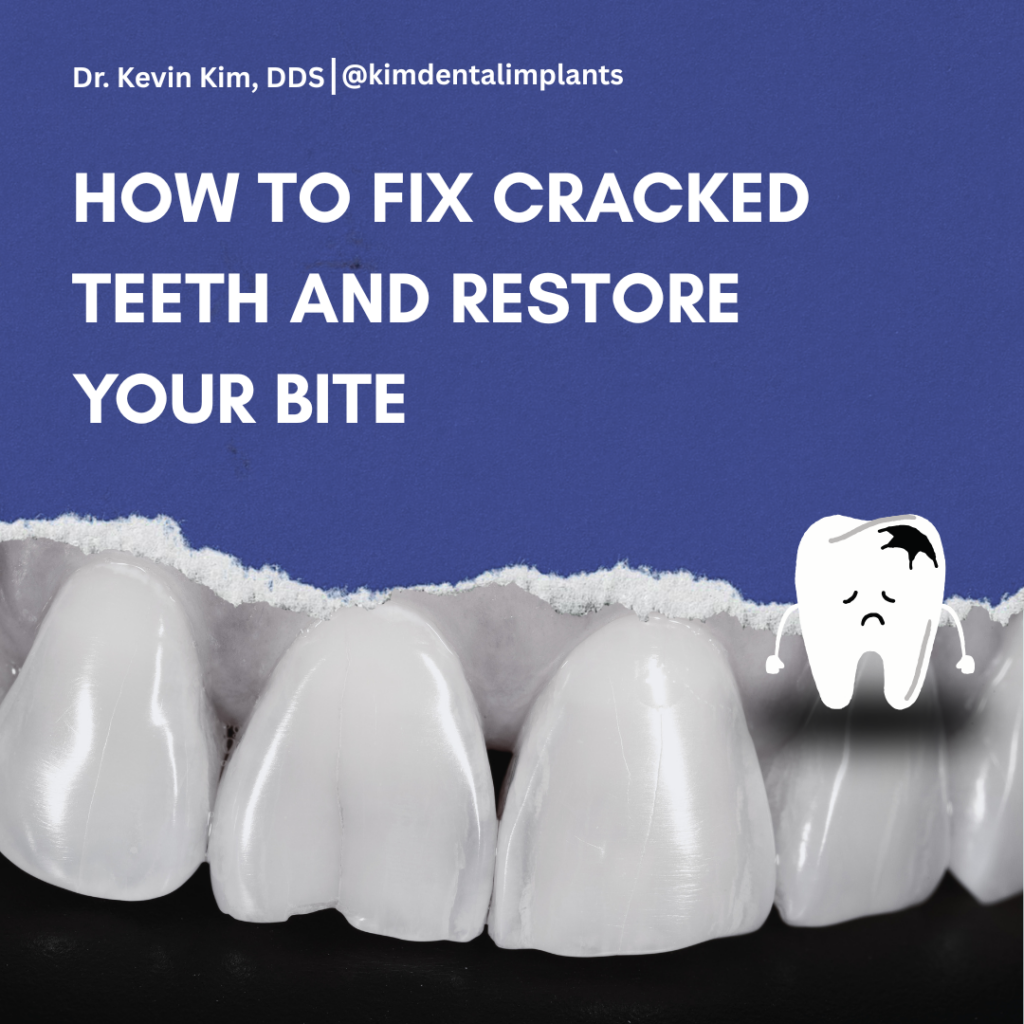
The Frustration of the Broken Summer Smile
Here is the revised paragraph with the phrase “fix cracked teeth” integrated naturally into the flow and context:
July 2026 has arrived, bringing with it the quintessential Pacific Northwest summer. The sun is shining over Lakewood, the skies are clear, and backyards are filled with the rich aroma of grilling. It is the season for multi-generational family gatherings, outdoor dinners, and seasonal comfort foods. But instead of enjoying a perfectly grilled ear of corn, a crisp local apple, or a tender steak, you find yourself navigating a quiet, frustrating dental minefield—wondering if it’s finally time to fix cracked teeth that have been holding you back. You chew tentatively, shifting food carefully to the other side of your mouth, paralyzed by a familiar, exhausting fear.
The Emotional Wear
Few experiences are quite as exhausting or deeply frustrating as feeling like your own mouth is actively failing you. When you cannot chew on one side of your face without a baseline of anxiety, a casual dinner party transforms from a relaxing social event into a high-stress medical hazard. You begin to avoid certain textures, quietly pull out of hard or chewy foods, and wonder if your teeth are simply made of chalk. It chips away at your confidence and your quality of life.
The Solution Thesis.
Here is the candid truth from a biomechanical perspective: teeth do not break or ache repeatedly due to “bad luck” or poor genetics alone. Structural failure in oral architecture is always driven by a definitive, identifiable biomechanical cause. Your teeth are engineered to handle immense force, but when structural integrity is compromised, they fail systematically.
By identifying the hidden micro-fractures and underlying engineering imbalances that cause teeth to fail, we can permanently reconstruct your bite, eliminate your pain, and restore your absolute freedom to eat whatever you want.
The Cycle of Weakened Enamel — Why Teeth Fail
If you feel trapped in a frustrating cycle where a particular tooth keeps breaking, or you find yourself constantly asking your mirror, “Why does my tooth keep breaking?” you are not suffering from a lack of calcium. You are dealing with an engineering problem. Teeth fail structurally due to a predictable trifecta of mechanical stressors:
A. The Aging Metal Wedge
The primary culprit behind a tooth that repeatedly fractures is often an old dental restoration hiding inside it. Traditional silver amalgam fillings were the industry standard for decades, but they possess a fundamental engineering flaw: they do not bond to your natural tooth structure. Instead, they simply sit packed inside a hollowed-out space, relying on undercuts to stay in place.
Over decades of heavy chewing, these massive metal fillings act exactly like a wedge. Furthermore, silver amalgam expands and contracts when exposed to temperature changes—such as going from an icy summer drink to a hot off-the-grill burger. This microscopic thermal expansion pumps continuous stress fractures into the surrounding enamel walls until a piece finally shears off entirely.
B. Chronic Nighttime Clenching
Another major driver of structural failure is nocturnal bruxism (severe nighttime teeth grinding and clenching). When you are awake, your brain naturally limits your biting force to protect your teeth. When you sleep, however, that protective governor is turned off. Your jaw can exert hundreds of pounds of continuous, unregulated pressure per square inch.
This relentless, cyclic loading fatigues your teeth’s crystalline enamel framework. It causes micro-cracks to spread silently beneath the surface, much like a microscopic stone chip on a car windshield that gradually spreads across the glass over time.
C. Bite Distribution Imbalances
Your mouth is a finely tuned chewing machine. If your jaw alignment is even slightly off-kilter, or if previous tooth loss has shifted your bite, specific teeth are forced to absorb far more mechanical force than they were biologically designed to handle. This uneven workload means that even soft foods—like a piece of bread or a slice of melon—can suddenly trigger a structural fracture. The enamel was not broken by the soft food; it was already pushed to its absolute breaking point by years of overload.
Identifying the Hidden Fracture — Cracked Tooth Syndrome
A. The Mystery Pain
One of the most common complaints we diagnose at our Lakewood clinic is a highly specific, elusive symptom: your tooth looks completely fine to the naked eye, yet you experience an agonizing, sharp flash of pain at a very specific moment during chewing. Specifically, it does not hurt when you press down, but the exact moment you let go of the bite, a lightning bolt of pain shoots through your jaw.
If you notice that your tooth hurts when biting down or you realize you can’t chew on one side of your mouth entirely to avoid that sudden flash, you are likely suffering from Cracked Tooth Syndrome.
B. The Mechanics of Rebound Pain
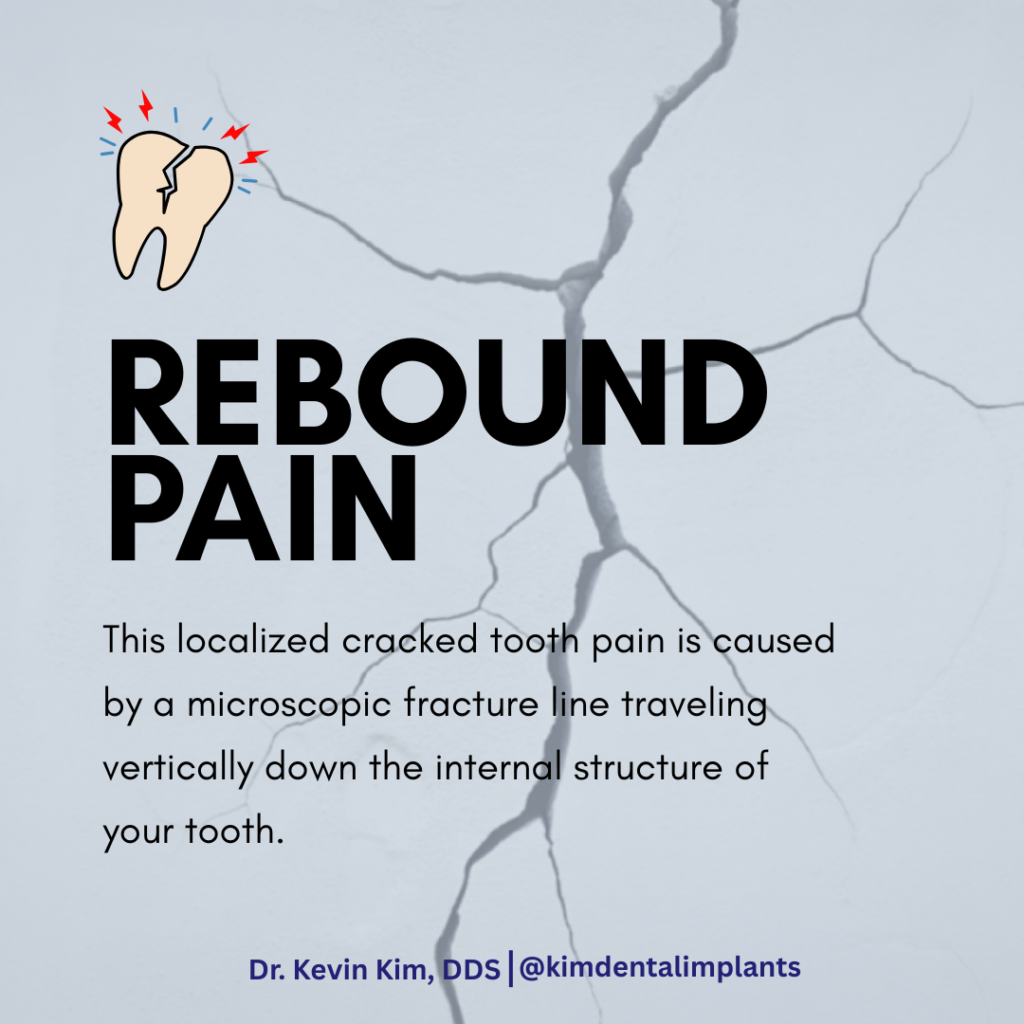
This localized cracked tooth pain is caused by a microscopic fracture line traveling vertically down the internal structure of your tooth. The unique “rebound pain” follows a very distinct mechanical pathway:
When you press down on food, the immense chewing force physically wedges the two pieces of the fractured tooth apart. This opening motion alters the hydrostatic pressure inside the tooth’s microscopic dentin tubules and exposes the delicate, highly sensitive internal nerve pulp. The moment you release the bite, the structural fragments snap back together instantly. This rapid snapping motion irritates the hyper-sensitive nerve tissue, sending a sharp, stabbing distress signal straight to your brain.
C. The Microscopic Invisible Threat
These micro-fractures are notoriously difficult to spot, which is why many patients suffer with them for months before receiving a correct diagnosis. They frequently hide beneath old, opaque fillings or run parallel to your gumline, making them completely invisible on standard, low-resolution dental X-rays.
Pinpointing these hidden faults requires advanced clinical diagnostics. In our practice, we utilize high-magnification dental operatory microscopes and specialized transillumination fiber-optic lighting. By bouncing light through the crystalline structure of the tooth, we can visualize exactly where the light’s internal reflection interrupts, locating the crack before it completely splits the tooth in half.
Stepping Out of the Pain Cycle — Urgent Structural Care
A. The Danger of Delay
When the warning signs of a cracked tooth need dental intervention appear, attempting to “wait it out” or simply avoiding that side of your mouth is a dangerous gamble. Unlike a broken bone or a cut on your skin, dental enamel cannot heal itself. It has no living cells to repair the fracture. Every single time you chew, talk, or clench, the crack flexes. This structural movement causes the crack to migrate, millimeter by millimeter, deeper into the tooth, traveling closer to your jawbone and the tooth’s central root system.
B. The Bacterial Infiltration
The moment a structural crack breaches the protective outer enamel barrier, it ceases to be just a mechanical problem—it becomes a biological emergency. The human mouth is home to billions of bacteria. A micro-fracture opens a wide, microscopic highway for these destructive bacteria to invade the soft, living pulp tissue inside the center of your tooth.
What began as a minor, treatable structural flaw can rapidly transform into an intensely painful, throbbing bacterial infection. Once the nerve tissue is contaminated, a simple structural repair is no longer sufficient; you will face the necessity of an immediate root canal procedure or, in severe cases where the root splits vertically, a complete emergency extraction.
C. Biomimetic Restorative Solutions
At Elite Restorative & Biomechanical Dentistry, we do not believe in just slapping a traditional filling over a structural failure. We specialize in interceptive, biomimetic restoration—dentistry designed to mimic the natural mechanics of a pristine tooth.
By utilizing advanced, high-strength porcelain onlays and full-coverage biomimetic crowns, we can structurally bind the fractured segments back together using advanced adhesive chemistry. This reinforces the natural architecture of your tooth, insulates the internal nerve from thermal changes, and instantly halts the flexing motion. The result? The pain cycle is stopped in its tracks, and your natural bite is fully restored.
Restorative Q&A
Can a cracked tooth be saved without needing a root canal?
Yes, absolutely—provided we catch the fracture early enough. If the structural crack is confined to the outer enamel and the hard dentin layer without extending into the central nerve canal, we can safely stabilize the tooth. By utilizing a custom, high-strength dental crown or a bonded porcelain onlay, we can wrap the tooth in a protective shield. This holds the tooth perfectly intact, prevents the crack from flexing open, and shields the living nerve from external stimulation. However, if the crack has been left untreated long enough to reach the internal pulp chamber, a root canal will be required to clear out the bacterial invasion before we can reinforce the remaining tooth structure.
Why doesn’t a standard dental X-ray always show a vertical tooth crack?
Standard dental X-rays pass directly through the tooth from front to back, producing a two-dimensional silhouette. If a microscopic vertical crack runs in the exact same direction as the X-ray beam, or if it is hidden directly beneath an opaque, metal silver filling, the crack will not register on the film. It is highly common for a tooth with severe cracked tooth pain to look picture-perfect on a standard X-ray. To accurately catch these stealthy fractures, we must utilize advanced diagnostics: high-magnification dental loupes, localized bite-pressure testing on individual tooth cusps, and advanced 3D digital imaging (CBCT) to view your tooth’s structural integrity from every possible angle.
Rebuild Your Bite and Enjoy Summer Dining
Living with a mouth where a tooth keeps breaking, or suffering from chronic, unpredictable, cracked tooth pain while biting, is entirely preventable. These issues are not random occurrences; they are clear, biological warning signs that your smile’s structural architecture is severely overloaded. Partnering with a skilled restorative dentist to stabilize a micro-fracture early will keep a simple crack from turning into a painful emergency extraction, giving you back a strong, worry-free bite.
Stop letting a broken tooth dictate what you can eat at summer gatherings. Dr. Kevin Kim and his elite clinical team in Lakewood, WA, specialize in advanced biomechanical diagnostics and durable, long-lasting tooth reconstruction.
Contact our office today to secure your high-magnification structural evaluation. Let us repair your fractured enamel, protect your smile, and get you back to enjoying your favorite seasonal foods without a single thought of anxiety!