How Dental Implants Preserve Your Facial Structure
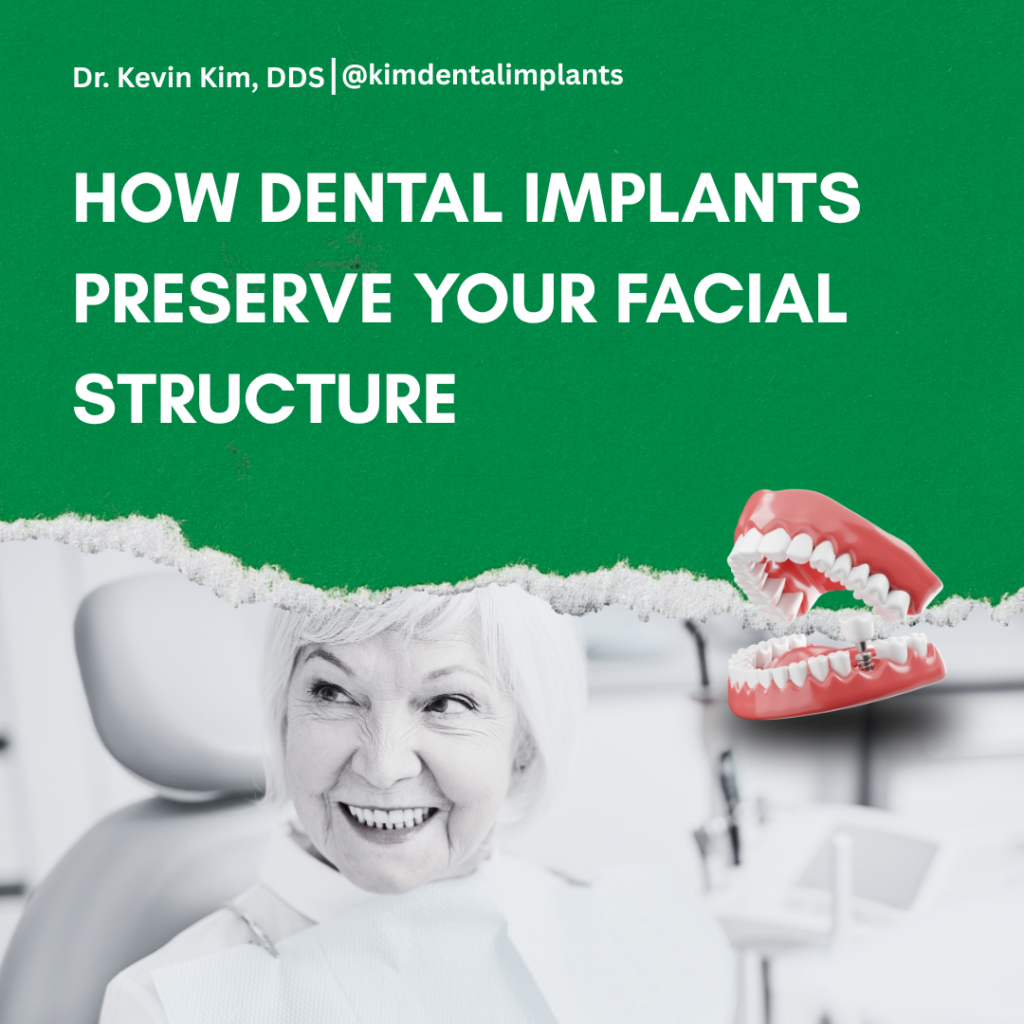
Most people think of a missing tooth as a cosmetic problem—a gap in the smile, a source of self-consciousness at the dinner table or in photos. What they don’t realize is that the visible gap is only part of the story. Beneath the surface, a much more significant process is quietly underway, reshaping your appearance over months and years in ways that no cream, filler, or skincare routine can reverse. To stop this aging process, understanding how dental implants preserve your facial structure is key, as they protect the underlying foundation from permanent bone loss.
This summer, as beach days and outdoor gatherings fill the calendar, more Lakewood patients are asking the same question: Why do I look older than I used to, and why does it seem connected to my teeth? The answer almost always leads back to bone loss — and the most powerful solution available in 2026 is the same one it’s been for decades: dental implants.
The Hidden Cost of a Missing Tooth
When a tooth is lost, whether from decay, injury, or extraction, the gap in your smile is the part everyone notices, but what happens below the gumline is what changes your face.
Your jawbone is living tissue, and like all living tissue, it responds to the demands placed on it. The roots of your natural teeth transmit constant pressure into the jawbone every time you bite and chew. That stimulation signals the body to maintain bone density in that area, continuously remodeling and replenishing the tissue to keep it strong.
Remove the tooth, and that signal stops. The bone no longer has a job to do, and the body, efficient as it is, begins to resorb or essentially dissolve the bone tissue in that area and redirect those minerals elsewhere. This process is called bone resorption, and it begins faster than most patients expect.
Research shows that up to 25% of bone volume in the area of a missing tooth can be lost within the first year alone. Over time, that cumulative loss shortens the lower face, reduces the support structure beneath your cheeks and lips, and creates the hollowed, sunken appearance that many people associate simply with “getting older.” In reality, it’s a structural problem with a structural solution.
Why Bone Loss Ages Your Face
Understanding jawbone health after tooth loss means looking at the face the way an architect looks at a building. Your skeleton is the framework that everything else hangs onto. When part of that framework disappears, the surfaces above it, skin, muscle, soft tissue, begin to collapse inward.
The effects show up in predictable ways. The cheeks appear hollow or deflated. The lips lose their natural fullness and begin to thin. The chin and jaw look less defined. The distance between the nose and chin gradually shortens, compressing the lower third of the face and deepening the lines around the mouth. Dentists and oral surgeons call the most advanced form of this process “facial collapse,” and while the term sounds dramatic, it accurately describes what happens when multiple teeth are missing, and bone loss has gone unaddressed for years.
This is why the anti-aging benefits of dental implants are not marketing language — they are anatomy. A dental implant doesn’t just replace a missing tooth. It replaces the root, restoring the mechanical stimulation the jawbone needs to maintain its density, volume, and shape.
How Dental Implants Prevent Bone Loss
Of all the tooth replacement options available, like dentures, bridges, and partials, dental implants are the only solution that addresses the underlying cause of facial aging after tooth loss. Here’s why that distinction matters.
A bridge replaces the visible crown of a missing tooth by anchoring to the neighboring teeth, but it provides no stimulation to the bone beneath the gap. Bone loss in that area continues uninterrupted. A denture rests on the surface of the gum tissue, and in fact may accelerate bone loss by applying diffuse pressure to the gumline without delivering the targeted, root-level stimulation the bone requires.
A dental implant is a titanium post that is surgically placed directly into the jawbone, replicating the position and function of a natural tooth root. Through a process called osseointegration, the bone gradually fuses with the implant surface over several months, creating a bond that is functionally indistinguishable from the connection between a natural root and the surrounding bone. Once integrated, the implant transmits the same biting and chewing forces into the jaw that a natural tooth would — and the bone responds by maintaining its density, volume, and architecture.
The result is dental implants and bone loss prevention working together over a lifetime. As long as the implant is in place and the patient maintains good oral hygiene, the bone-preserving effect continues indefinitely.
The Anti-Aging Benefits of Dental Implants, Area by Area
The structural preservation that implants provide translates into visible, measurable anti-aging benefits — not just in how your smile looks, but in how your entire face presents.
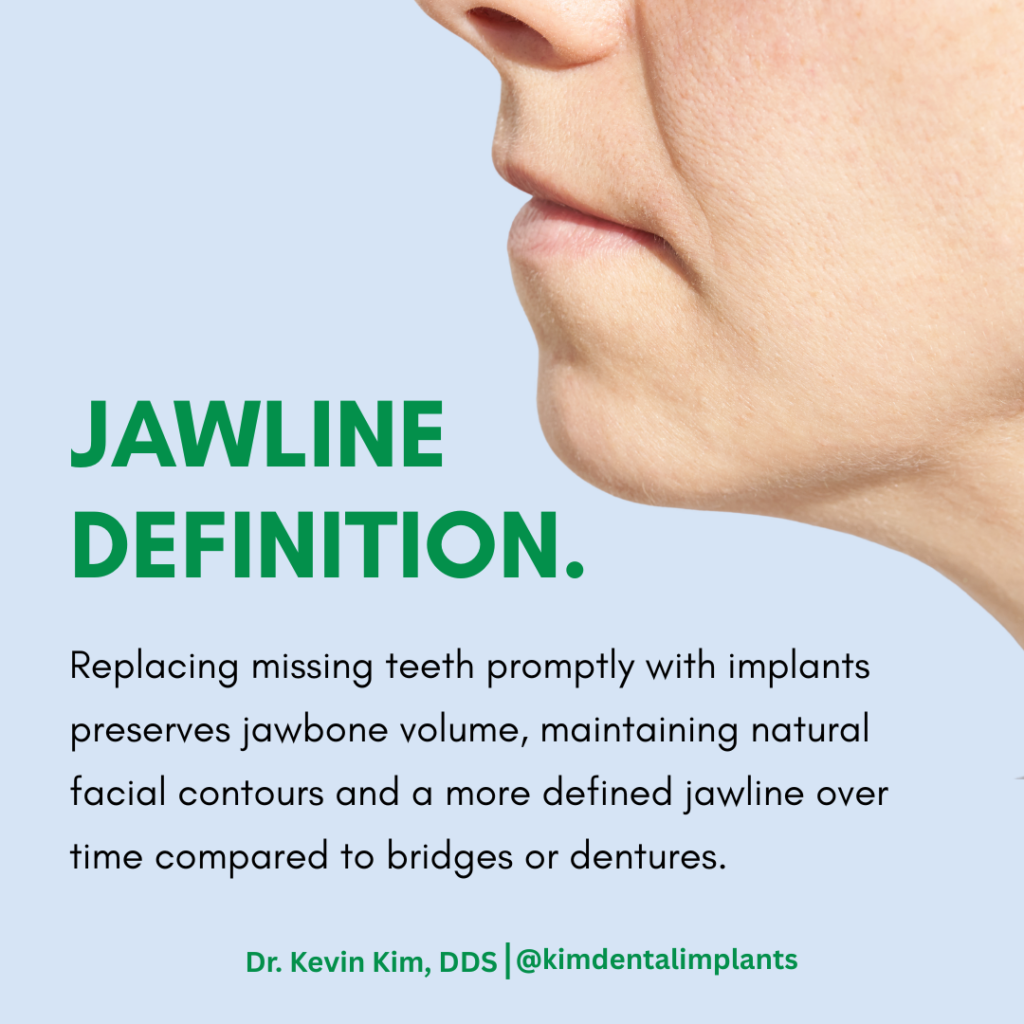
Jawline definition.
The jawbone provides the underlying structure that keeps the lower face sharp and defined. When bone volume is preserved, the skin and soft tissue above it maintain their natural contours. Patients who replace missing teeth promptly with implants consistently report that their jawline is more defined as they age compared to those who choose bridges or dentures.
Cheek and lip support.
The bones of the upper and lower jaw provide the scaffolding that supports your cheeks and lips from the inside. Bone loss causes cheeks to appear sunken and lips to lose volume and projection. Implants preserve that internal support, keeping facial contours fuller and more youthful over time.
Facial proportion and balance.
One of the subtler but most significant effects of bone loss is the shortening of the lower face. As the distance between the nose and chin decreases, the face begins to look compressed or disproportionate. Implants maintain the proper vertical dimension of the face, preserving the balance of the upper, middle, and lower thirds that is associated with a youthful, healthy appearance.
Why Timing Matters: The Case for Early Intervention
One of the most important things Dr. Kim emphasizes with Lakewood patients is that bone loss is not a problem that waits. The resorption process begins almost immediately after a tooth is lost, which means the window for preventing it rather than reversing it is relatively short.
Patients who replace a missing tooth with an implant promptly after extraction preserve the most bone with the least intervention. Patients who wait months or years before seeking treatment often require bone grafting to rebuild the volume that has already been lost before an implant can be placed. Bone grafting is a highly effective procedure, but it adds time, cost, and recovery to the overall treatment process.
This is why dental implants and bone loss prevention go hand in hand from the very beginning of the conversation, not as an afterthought once damage has already been done.
Dr. Kevin Kim’s Approach: Precision Planning for Lasting Results
As a dental implant specialist serving Lakewood, WA, and the surrounding communities, Dr. Kevin Kim approaches every case with a focus on long-term structural health and not just immediate aesthetics. Before any implant is placed, Dr. Kim uses 3D cone beam CT imaging to assess the current density and volume of the patient’s jawbone, identify the optimal implant position, and anticipate any bone grafting needs before surgery begins.
This level of precision planning ensures that the implant is placed in a position that maximizes osseointegration, distributes bite forces appropriately, and delivers the best possible long-term bone preservation outcomes. Using the latest biocompatible implant materials available in 2026, engineered for faster and more complete bone integration, Dr. Kim’s patients experience results that are both durable and natural-looking.
Frequently Asked Questions
Preserve Your Jawline — and Your Future
A missing tooth is not simply a gap in your smile. It is the beginning of a structural change to your face that will become more visible and more difficult to address, with every passing year. The anti-aging benefits of dental implants are not a bonus feature; they are the core of what makes implants the gold standard of tooth replacement.
This summer, whether you’re headed to the beach, gathering with family, or simply wanting to feel confident in your own skin, it’s a good time to take your jawbone health seriously. The best version of your face five, ten, and twenty years from now depends in part on decisions made today.
Ready to protect your smile and your facial structure?
Contact Kim Dental Implants in Lakewood, WA, to schedule your consultation with Dr. Kevin Kim. Advanced 3D imaging, personalized treatment planning, and a commitment to your long-term health starting with a single conversation.